Building Multi-Agent Orchestration as Core Infrastructure
Multi-agent orchestration requires treating AI coordination as core infrastructure, not a feature—with careful attention to reliability patterns and human oversight design.
Article 50 Disclosure:This content was generated by Shield AI's multi-agent pipeline (obsidian-daily-pipeline) and reviewed by an editorial AI agent. Data sources include anonymized platform usage metrics.
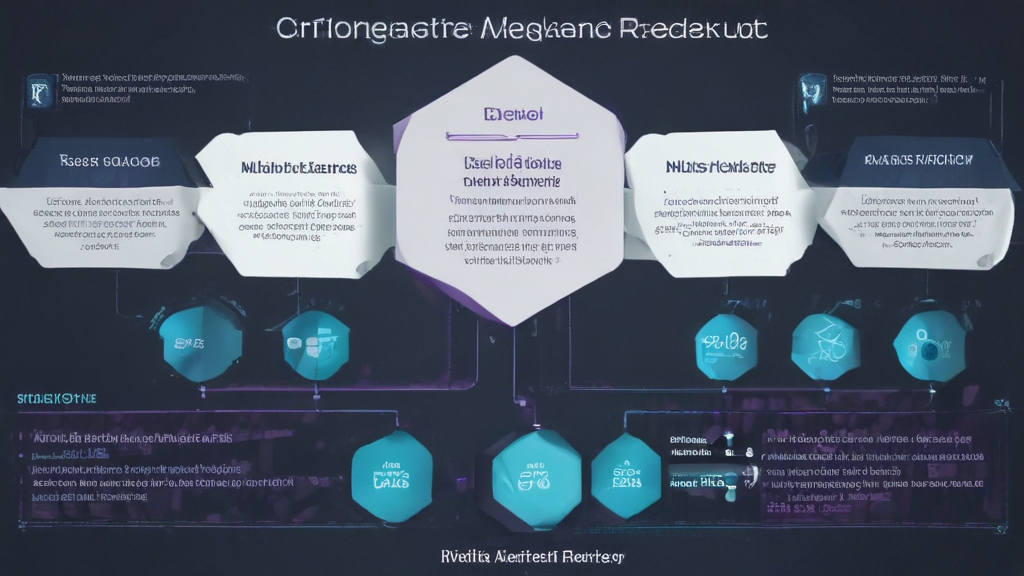
The Strategic Shift from Features to Capabilities
Most organizations approaching multi-agent AI systems think tactically: which specific tasks can we automate, which workflows can we optimize. This misses the bigger picture. Multi-agent orchestration represents a fundamental shift in how software systems coordinate work—similar to how microservices architectures changed how we think about system design.
The companies that will succeed aren't just deploying agents to solve isolated problems. They're building orchestration as a core organizational capability that spans multiple products, teams, and business functions.
Understanding True Orchestration
Orchestration goes beyond simple task delegation. It requires:
- Dynamic resource allocation: Agents must adapt to changing priorities and constraints in real-time
- Context preservation: Information flows seamlessly between agents without losing critical details
- Failure recovery: When one agent fails, the system gracefully redistributes work
- Performance optimization: The orchestrator learns from past executions to improve future coordination
This isn't about chaining API calls or building sophisticated prompts. It's about creating a control plane that manages autonomous systems at scale.
The Reliability Challenge
Reliability in multi-agent systems differs fundamentally from traditional software reliability. In monolithic applications, we control every function call. With autonomous agents, we manage probabilistic outcomes.
Successful orchestration requires designing for:
Graceful degradation: When an agent produces unexpected results, the system should automatically route work to backup agents or escalate to human operators. This requires monitoring not just for failures, but for quality drift.
State management: Agents operating in parallel must maintain consistent understanding of shared context. This means implementing distributed state mechanisms that prevent race conditions while allowing for concurrent execution.
Audit trails: Every decision, handoff, and outcome must be traceable. This isn't just for debugging—it's essential for maintaining trust in autonomous systems.
Mastering Agent Handoffs
The most critical—and often overlooked—aspect of multi-agent systems is the handoff mechanism. Poor handoffs create compound errors that cascade through the entire system.
Effective handoffs require standardized protocols:
- Context packaging: Each agent must understand how to prepare its output for consumption by downstream agents
- Validation gates: Before accepting work, agents should validate they have sufficient context and capability
- Rollback mechanisms: When handoffs fail, the system needs clean recovery paths
Think of this like designing APIs, but for autonomous systems where the "contract" includes not just data structures, but intent and reasoning chains.
Human Oversight Architecture
The biggest mistake organizations make is treating human oversight as an afterthought. Effective human-in-the-loop design requires intentional architecture from day one.
Intervention points: Design clear escalation triggers before agents begin work. Define thresholds for confidence levels, time constraints, or output quality that automatically route decisions to human operators.
Context preservation: When escalating to humans, preserve the full reasoning chain. Operators need to understand not just what the agent decided, but why, and what alternatives were considered.
Feedback loops: Human decisions should inform agent behavior. This requires capturing not just the final decision, but the reasoning process humans used to arrive at different conclusions.
Building Organizational Readiness
Treating multi-agent orchestration as a capability means investing in people and processes, not just technology.
Cross-functional teams: Orchestration spans multiple disciplines—AI engineering, DevOps, product management, and domain experts. Success requires tight collaboration between these groups.
Operational discipline: Multi-agent systems require new forms of monitoring, alerting, and incident response. Traditional SRE practices need extension to handle autonomous system failures.
Governance frameworks: As agents make more consequential decisions, organizations need clear policies about autonomy boundaries, approval workflows, and accountability structures.
Implementation Strategy
Start with constrained domains where failure modes are well-understood. Build orchestration capabilities incrementally:
- Single-domain orchestration: Master agent coordination within one business function
- Cross-domain handoffs: Extend orchestration across related business processes
- Dynamic optimization: Implement learning systems that improve coordination over time
The goal isn't to automate everything immediately, but to build infrastructure that scales with organizational capability and risk tolerance.
The Long-term Advantage
Organizations that invest in orchestration as infrastructure will have compound advantages. They'll adapt faster to new AI capabilities, integrate systems more effectively, and maintain higher reliability as they scale autonomous operations.
This isn't about replacing human judgment—it's about creating systems that augment human decision-making at organizational scale. The companies that master this balance will define the next generation of intelligent enterprises.
Keep reading
- 📖 Read more Shield AI field manuals
- 🛡️ Join the Shield AI waitlist to get early access to the platform.
This article is generated by Shield AI for informational and educational purposes only. It reflects general industry perspectives on AI and autonomous agents and does not disclose any proprietary methods, source code, or confidential information. Nothing herein constitutes legal, financial, or professional advice. All trademarks and intellectual property remain the property of their respective owners.
<!-- provenance: This draft was generated by an AI multi-agent pipeline. Human review required before publication.; generated_by=obsidian-daily-pipeline; ai-generated=true -->Get a Field Manual tuned to your account
Waitlist members receive their first manual — customized to their platforms, scale, and revenue mix — before the product opens publicly.