Context Engineering: The Hidden Architecture Behind Reliable AI Systems
Beyond model selection, the real determinants of AI system quality are retrieval, memory, and context window management—the engineering disciplines that separate reliable systems f
Article 50 Disclosure:This content was generated by Shield AI's multi-agent pipeline (obsidian-daily-pipeline) and reviewed by an editorial AI agent. Data sources include anonymized platform usage metrics.
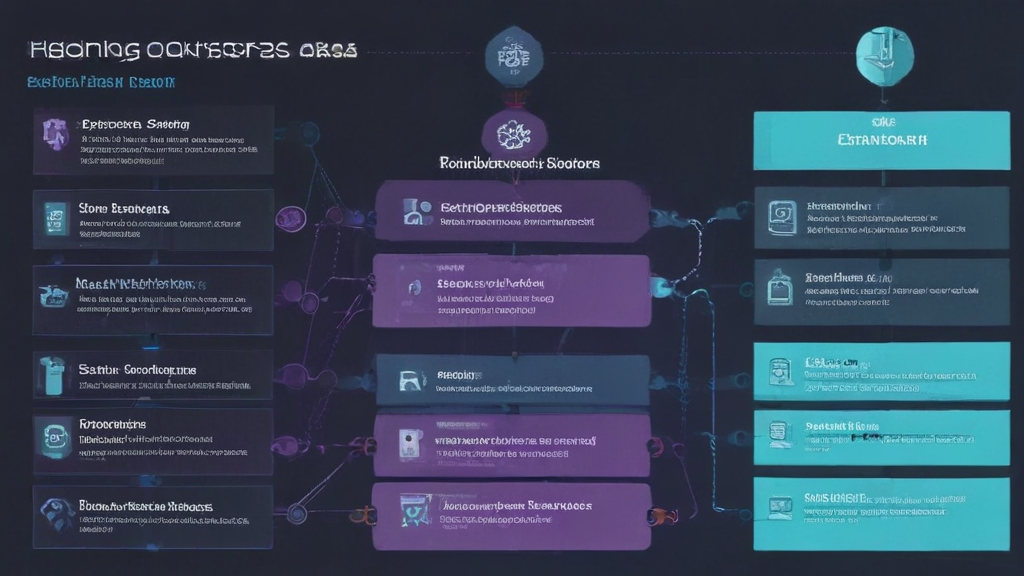
The Model Is Only Half the Equation
While organizations debate between GPT-4, Claude, or open-source alternatives, they often miss the real determinant of AI system quality: context engineering. The difference between a chatbot that occasionally gets things right and an AI system that consistently delivers reliable outputs lies not in the model architecture, but in how intelligently you feed information to that model.
Context engineering encompasses three critical components: retrieval systems that surface relevant information, memory architectures that maintain state across interactions, and context window management that optimizes how information flows through the model. Master these, and even smaller models can outperform frontier systems in real applications.
Retrieval: Beyond Simple Similarity Search
Most teams start with basic vector similarity search—embed documents, embed queries, find matches. This naive approach fails in production because similarity doesn't equal relevance. A query about "Q3 revenue projections" might match documents containing those exact words while missing the critical analysis buried in a strategic planning memo that uses different terminology.
Effective retrieval systems layer multiple strategies. Hybrid approaches combine semantic search with keyword matching and metadata filtering. Time-based relevance ensures recent information surfaces appropriately. Query expansion techniques help bridge vocabulary gaps between user questions and document content.
The architecture matters too. Rather than retrieving once and hoping for the best, sophisticated systems implement multi-stage retrieval: initial broad search, relevance scoring, re-ranking based on context, and recursive retrieval that can follow references and citations. This creates a more comprehensive information foundation for the model to work with.
Memory: State Management for Coherent Interactions
AI systems without proper memory architecture behave like participants with severe amnesia—every interaction starts from scratch. This limitation becomes critical in applications requiring continuity: customer service, technical support, or collaborative workflows.
Memory systems operate at multiple time scales. Short-term memory maintains conversation context within a single session. Medium-term memory tracks ongoing projects or customer relationships across sessions. Long-term memory captures patterns, preferences, and learned behaviors that inform future interactions.
The challenge lies in selective memory—determining what information to preserve, update, or discard. Naive approaches that store everything quickly hit context limits and introduce noise. Effective systems implement hierarchical memory structures with summarization layers that compress historical context while preserving essential details.
Context Window Optimization: The Attention Economy
Context windows represent the fundamental constraint in language model applications. Even models with million-token contexts require careful curation of information. Every token matters—not because of computational cost, but because attention dilutes across longer sequences.
Context optimization starts with prioritization frameworks. Critical information should appear early and be reinforced throughout the context. Background information should be compressed or omitted entirely when not directly relevant. Template structures help organize information consistently, making it easier for models to locate and utilize specific details.
Dynamic context management adapts to interaction patterns. Systems can expand context when dealing with complex, multi-step problems and compress it for simple queries. Context rotation techniques maintain relevant historical information while making room for new inputs.
Integration Patterns for Production Systems
These components must work together seamlessly. The retrieval system informs what enters memory, memory influences what context gets preserved, and context window constraints shape both retrieval and memory strategies.
Successful implementations often employ a layered architecture:
- Intent classification determines the type of information needed
- Retrieval orchestration coordinates multiple information sources
- Context assembly combines retrieved information with relevant memory
- Response generation produces outputs using the prepared context
- Memory updating captures new information and interaction outcomes
Each layer can be optimized independently while maintaining system coherence.
Measuring What Matters
Context engineering quality requires different metrics than model performance. Retrieval accuracy measures how often the system surfaces relevant information. Context utilization tracks whether the model actually uses provided information in its responses. Memory consistency evaluates whether the system maintains coherent state across interactions.
These metrics reveal where optimization efforts should focus. A system with perfect retrieval but poor memory management will frustrate users with inconsistent behavior. Excellent memory with poor retrieval leads to responses based on outdated or incomplete information.
The Strategic Advantage
Organizations that master context engineering create defensible advantages. While competitors can access the same foundation models, they cannot replicate well-engineered retrieval, memory, and context management systems. These components embody domain expertise, operational knowledge, and user behavior patterns that are difficult to reverse-engineer.
As AI capabilities become commoditized, the companies that build reliable, contextually-aware systems will differentiate themselves. The question is no longer which model to use, but how intelligently you can engineer the context that surrounds it.
Keep reading
- 📖 Read more Shield AI field manuals
- 🛡️ Join the Shield AI waitlist to get early access to the platform.
This article is generated by Shield AI for informational and educational purposes only. It reflects general industry perspectives on AI and autonomous agents and does not disclose any proprietary methods, source code, or confidential information. Nothing herein constitutes legal, financial, or professional advice. All trademarks and intellectual property remain the property of their respective owners.
<!-- provenance: This draft was generated by an AI multi-agent pipeline. Human review required before publication.; generated_by=obsidian-daily-pipeline; ai-generated=true -->Get a Field Manual tuned to your account
Waitlist members receive their first manual — customized to their platforms, scale, and revenue mix — before the product opens publicly.