Context Engineering: The Hidden Discipline Behind Reliable AI Systems
Context engineering—managing retrieval, memory, and information flow—determines AI system reliability more than model choice alone.
Article 50 Disclosure:This content was generated by Shield AI's multi-agent pipeline (obsidian-daily-pipeline) and reviewed by an editorial AI agent. Data sources include anonymized platform usage metrics.
The Model Selection Trap
Most technology leaders approach AI system reliability by focusing on model selection—choosing between the latest foundation models or fine-tuning approaches. This focus, while important, misses the fundamental challenge: how your AI system understands and maintains context throughout interactions.
Context engineering—the deliberate design of how information flows into and persists within AI systems—often determines success or failure more than model architecture. The difference between a brittle prototype and a production-ready system lies not in the sophistication of the underlying model, but in how effectively you manage the information that model processes.
Understanding the Context Stack
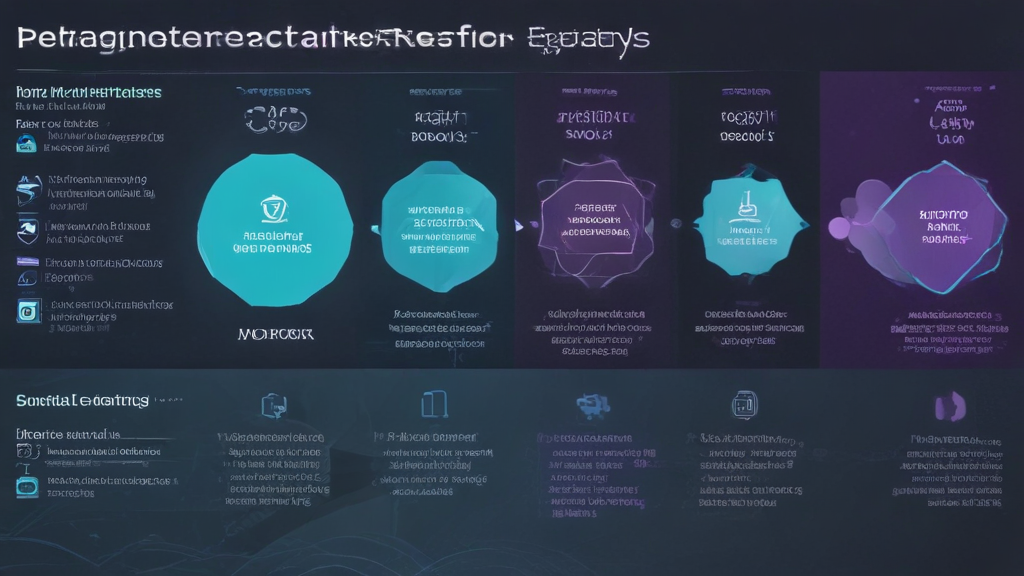
Effective AI systems operate on multiple layers of context, each requiring different engineering approaches:
Immediate Context: The current conversation or task state that fits within the model's attention window. This includes the user's immediate request, relevant conversation history, and any real-time data needed for the current interaction.
Retrieved Context: Information pulled from external systems—databases, documents, APIs—that provides necessary background but exceeds the immediate context window. This layer requires sophisticated retrieval strategies and relevance scoring.
Session Context: Persistent information maintained across interactions within a single session or workflow. This might include user preferences, accumulated state, or multi-step process tracking.
Organizational Context: Broader system knowledge including business rules, domain expertise, and institutional memory that should inform AI behavior consistently.
Retrieval as a Strategic Architecture Decision
Retrieval-augmented generation (RAG) systems represent the current state of practice for managing context beyond immediate model limits. However, treating retrieval as a simple "search and inject" operation leads to brittle systems.
Effective retrieval requires:
- Semantic understanding of query intent, not just keyword matching
- Ranking algorithms that consider both relevance and recency
- Chunk optimization that balances granularity with coherence
- Source attribution for debugging and compliance requirements
The architecture decisions around retrieval—how you index information, structure queries, and rank results—directly impact system reliability. A poorly designed retrieval system will surface irrelevant context, leading to incorrect responses regardless of model quality.
Memory Systems and State Management
Beyond retrieval lies the challenge of memory management. Production AI systems must maintain coherent state across interactions while managing the fundamental constraint of finite context windows.
This requires explicit architectural decisions:
Summarization strategies for compressing conversation history without losing essential information. The choice of what to preserve versus what to compress affects system behavior over extended interactions.
State persistence mechanisms that maintain user context, task progress, and system configuration across sessions. These systems must balance comprehensive memory with privacy requirements and computational constraints.
Context refresh policies that determine when to update or invalidate cached information. Stale context can be worse than no context, particularly in dynamic environments.
Context Window Optimization
While context windows continue to expand, treating them as infinite resources leads to inefficient and unreliable systems. Larger windows introduce their own challenges:
- Attention dilution where models perform worse when relevant information is buried in extensive context
- Latency penalties from processing unnecessary information
- Cost implications that scale with context length
Effective context engineering requires strategic decisions about what information to include, when to include it, and how to structure it for optimal model performance.
Engineering for Consistency
Context engineering isn't just about making AI systems smarter—it's about making them predictable. Production systems require consistent behavior across similar inputs and stable performance as context evolves.
This demands:
Deterministic context construction where similar queries produce similar context, reducing variability in system responses.
Context validation systems that verify information quality and relevance before injection into model prompts.
Monitoring and debugging capabilities that track context evolution and identify sources of inconsistent behavior.
Building Context-Aware Organizations
The most successful AI implementations treat context engineering as a cross-functional discipline. Product teams define what context matters for user experience. Engineering teams build systems that capture and maintain that context reliably. Operations teams monitor context quality and system consistency.
This organizational approach recognizes that context engineering isn't a one-time architectural decision—it's an ongoing practice that evolves with system requirements and user needs.
The Path Forward
As AI systems become more central to business operations, context engineering will differentiate reliable systems from experimental ones. The organizations that invest in systematic approaches to information retrieval, memory management, and context optimization will build AI systems that scale effectively and behave predictably.
The foundation models will continue advancing, but the real competitive advantage lies in how effectively you engineer the context that surrounds them.
Keep reading
- 📖 Read more Shield AI field manuals
- 🛡️ Join the Shield AI waitlist to get early access to the platform.
This article is generated by Shield AI for informational and educational purposes only. It reflects general industry perspectives on AI and autonomous agents and does not disclose any proprietary methods, source code, or confidential information. Nothing herein constitutes legal, financial, or professional advice. All trademarks and intellectual property remain the property of their respective owners.
<!-- provenance: This draft was generated by an AI multi-agent pipeline. Human review required before publication.; generated_by=obsidian-daily-pipeline; ai-generated=true -->Get a Field Manual tuned to your account
Waitlist members receive their first manual — customized to their platforms, scale, and revenue mix — before the product opens publicly.